
Met, Not Fixed — A Wednesday Reflection + Book Journey Invitation
I keep trying to fix myself… when what I needed was to be met.
There’s a particular kind of exhaustion that shows up when you’ve been living like a project.
Always improving. Always correcting. Always trying to become “better” so you can finally feel okay—finally feel loved, safe, settled, chosen.
And yet… even after the self-work, the striving, the insight… something still aches.
Not because you’re failing.
But because the deepest ache in a human body is rarely solved by more effort.
Sometimes what you needed—what you still need—is not another strategy.
It’s a moment of being met.
I think about a small scene I’ve watched a hundred times without naming it:
A child at a park, halfway between the bench and the play structure. They run, they stop, they turn their head—just long enough to find their person’s eyes. Not a lecture. Not a fix. Just the quiet confirmation: You’re still there. And then the child runs again—braver, lighter, more free.
That’s not weakness. That’s wiring.
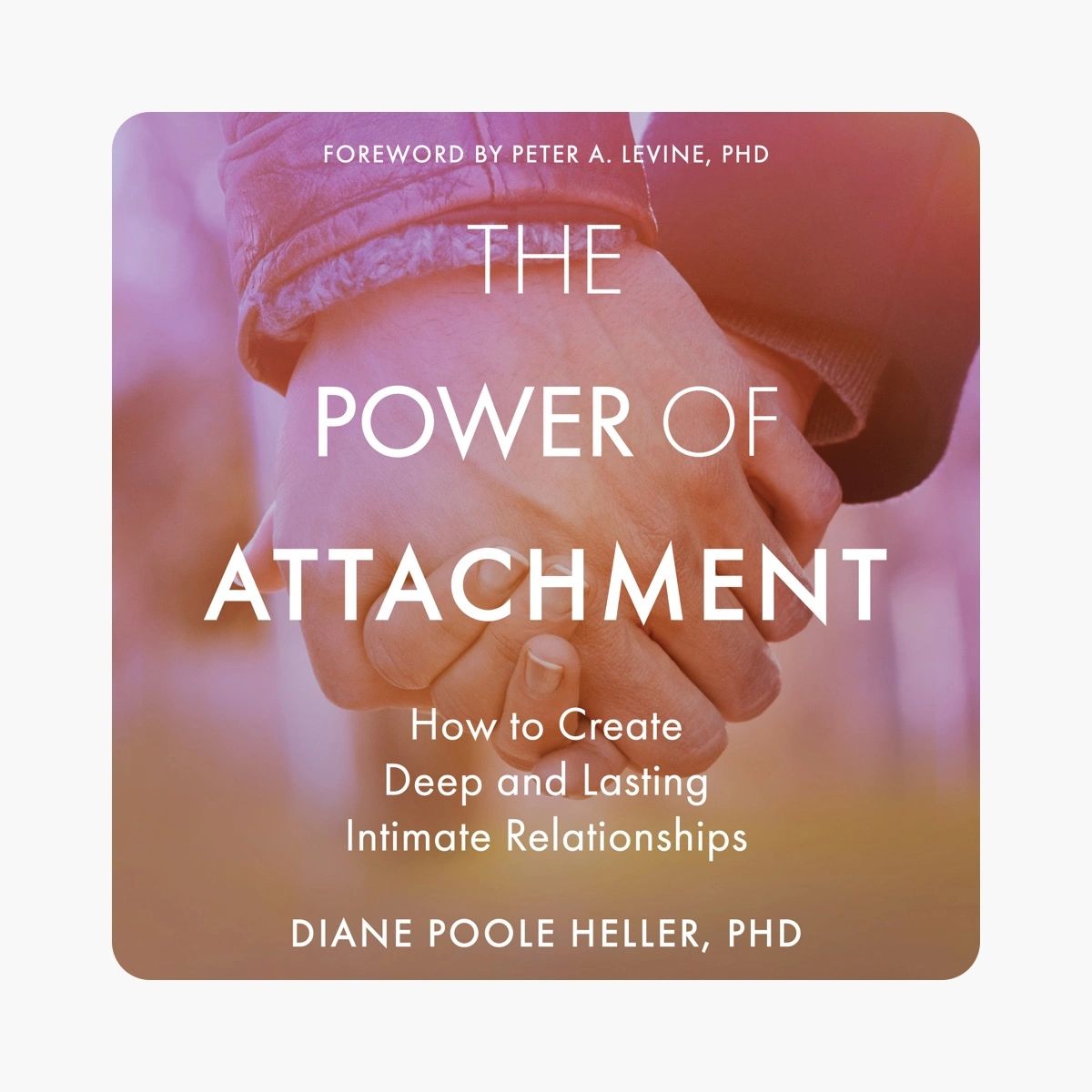
In the introduction to The Power of Attachment, Diane Poole Heller brings us back to the foundation:
we are built for connection the way lungs are built for air.
Not as a preference. Not as a personality quirk.
As a human need.
And when we don’t get enough of that steady kind of contact—
the kind that quietly says, “I see you. I’m here with you. You’re safe with me.”—
our systems do what systems do: they adapt.
We become extra capable.
Extra pleasing.
Extra independent.
Extra funny.
Extra useful.
Extra strong.
Not because we’re broken. Because we’re brilliant at survival.
This is one of the most tender gifts of attachment work: it doesn’t shame the strategies that helped you endure. It helps you see the difference between who you are… and what you had to become.
Because attachment patterns aren’t just “thoughts.”
They live in breath, posture, proximity, tone, urgency, silence.
They show up in how we reach… and how we protect.
And the introduction sets a tone that feels like a doorway rather than a diagnosis:
Your pattern isn’t your personality. It’s your protection.
That means you don’t have to call yourself broken because you get anxious, shut down, overthink, overfunction, avoid, or feel “too much.” Those aren’t moral failures. They’re intelligent responses to what your nervous system learned about closeness, safety, and staying connected.
But here’s the turning point the introduction quietly holds:
what protected you then might be costing you now.
And the hope is real: patterns can change.
Not by forcing yourself into “secure behavior,” but by learning—slowly, gently—what safety feels like in the body and in relationships, and letting that become familiar.
So this week, I’m beginning something simple:
A Chapter-by-Chapter Wednesday Journey
Over the coming weeks, I’ll be walking through The Power of Attachment chapter by chapter in these Wednesday Reflections—tenderly, relationally, and in a way that helps the material land in real life.
If you want to follow along, I encourage you to purchase the book and read with me. You don’t have to rush. You don’t have to do it perfectly. Just bring your curiosity and your kindness.
Book to follow along: The Power of Attachment by Diane Poole Heller
Each week, I’ll share:
- one simple truth from the chapter
- one tiny body-based practice (30–60 seconds)
- a few reflection prompts to help you meet yourself without shame
You’re warmly welcome to read at your own pace and let this be a gentle companioning—not another self-improvement program. More like a steady hand on the shoulder that says, “You’re not alone. And you don’t have to earn your way into safety.”
Tiny Practice (30–60 seconds): “Met, Not Fixed”
- Put one hand on your chest. Feel warmth and contact.
- Let your exhale be longer than your inhale—just one or two breaths.
- Whisper (or think): “I don’t need to be fixed. I need to be met.”
- Ask: “What would feel supportive—by 1%—today?”
(A pause before replying. A glass of water. One honest “not today.” One boundary sentence.)
If you feel even a small softening, that counts. That’s your system recognizing contact.
Reflection Questions
- Where do I treat myself like a project—something to fix before I’m worthy of rest or love?
- What does “being met” feel like in my body (even if it’s unfamiliar)?
- What is one place I keep performing for connection—and what would a 1% shift look like this week?
- What support would I allow if I believed I’m already worthy?
You don’t have to transform everything in one week.
This is just the introduction—a threshold.
But it’s a holy one:
You are not a problem to solve. You are a person to be held.
About the Author
Kristi M. Estrada, LPC-S, NCC, SEP is a Licensed Professional Counselor–Supervisor and Somatic Experiencing® Practitioner based in Phoenix, Arizona. She specializes in trauma-informed care, adult attachment theory, and post-traumatic growth—helping clients navigate life’s most challenging seasons with compassion, clarity, and steadiness. Kristi believes healing is not about “fixing” what’s broken, but about honoring each person’s story, returning to the body’s wisdom, and building the capacity to live with greater peace and self-worth. Her work integrates nervous system regulation, somatic practices, and relational healing to create a safe, supportive space for transformation.
Connect: @healingservant.com
Educational/Reflection Disclaimer: This reflection is for educational and reflective purposes only and is not a substitute for therapy, medical care, diagnosis, or crisis support. If you feel overwhelmed or unsafe, please seek support from a qualified professional or local resources.